|
Another Interview with Beverley
by Bianca, Year 12 Student, Adelaide
1. Do you approve of home schooling?
Absolutely. My three children were homeschooled. We homeschooled for nineteen years.
2. Why do you think some adults/children choose home schooling over'institutional' schooling?
A variety of reasons. The reasons families chose to begin or continue homeschooling tend to change over time as the benefits become more apparent. Some of the reasons, cited in research include:
- A marked lack of confidence in state related institutions, with a tendency toward conservative view points;
- Lack of direct influence in determining curriculum and school agendas;
- Opposition to the ideological content of school programs and/or methodology used;
Conflicting value orientations of home and schools;
- Need for individualised attention for children with special needs (gifted and talented and specific learning problems);
- Focus on perceived gains in social development from home education, with a strong emphasis on family unity and relationships;
- Concern with declining academic standards in schools;
- Perceived lack of availability of educational programs to suit individual children's learning needs, styles, rates and interests;
- Avoidance of negative peer influences and damaging socialisation experiences;
Perceived lack of attention in schools to holistic development of children, including spiritual:
- Strong parental sense of primary responsibility for children's education, with a need to have access to, and some control over, their children's educational experiences as a strong motivational factor;
- Offers solutions to present or potential educational problems, sometimes as a result of deterioration of communications and hostile relationships between families and schools;
- Parents' own educational experiences, or memories of unhappy or unsuccessful personal experiences of schooling;
- High cost of alternative and private schooling, including correspondence education;
Lack of educational and schooling choice in local area;
- Opposition to the competitive nature of schooling, grading or testing;
- Perceived gains in autonomous home learning programs, independent study skills and higher student motivation;
- The development in parents of a stronger sense of satisfaction with their own lives through directing their children's education;
- Home education offers a natural learning and socialising environment as opposed to the contrived and artificial environments and learning programs of schools.
3. Why did you choose home schooling over 'institutiional' schooling?
Initially it was because we wanted to continue to be with our daughter as we had done for the previous five years, plus we wanted to be involved in her education more than the local school would allow. We'd participated in Playgroup and Kindergarten as volunteers in the classroom and wanted to continue in the same manner. The school was inflexible. We discovered homeschooling and gave that a try and were exceptionally happy with the outcomes.
4. Do you think that home schooling affects the development of social behaviours? Why?
Absolutely. It enhances social behaviour and results in better socialised young people. The results - personally experienced, not only in my own family but also in the hundreds of homeschooling families I've talked to over the last two decades, as well as in well-documented university research studies here and overseas - show that home educated children have greater levels of self confidence and self esteem, usually know what they want to do when they 'graduate', are usually already working, either part time or voluntary, and make the transition to tertiary education more smoothly than schooled students. Homeschooling tends to build stronger and more respectful family ties - family members become and remain friends throughout childhood and adolescence and into the adult years.
5. Do you think home schooling affects children in any other way?
Homeschooled kids seem to know their own minds and learning preferences better and seem able to focus on tasks without supervision better than a lot of schooled kids. They play more, both at home and with friends. Parents of homeschooled children go out of the their way to create social opportunities with other homeschooling familes - picnics, sleepovers, camps, excursions, activities, group lessons, etc - everything school kids get. There are strong support groups in every capital in each and in most country regions now.
6. Is home schooling beneficial or detrimental to young students?
I'd say beneficial to 99% of children, even if they do it for only a term or a year. A few children and families find it difficult and school is always a second option for them.
7. Do you feel that there are any advantages of home schooling?
Yes. The number of research studies demonstrating the effectiveness of home learning for academic and social success increase each year. For many families the unintended outcomes far outweigh perceived academic benefits. These following homeschooling outcomes, combined from national and international research including John Peacock's major Australian study, The Why and How of Home Education in Australia, have been consistently listed:
- closer family relationships, with children playing a more positive and significant role in family life, and an emphasis on family making skills;
- parental personal fulfilment and increased learning opportunities for parents as well as children;
- greater understanding of personal responsibility;
- natural fostering of co-operative and team behaviours;
- an empowering process for both parents and children;
- greater freedom from arbitrary time limits such as terms and year levels to pursue educational activities and interests;
- increased opportunity for one to one interaction with more skilled peers or parents, which lead to cognitive challenges and gains;
- children are able to ask more questions, with more time allowed for answers to be found, leading to increased motivation for learning;
- children and parents engage in more complex language in the home learning environment compared with classroom settings, and this improves the intellectual and language development of children;
- children have been consistently shown to rate equal to or higher than average on standardised achievement tests in the USA;
- home educated children's self concept has been shown to be significantly higher than schooled children, indicating that home education does not socially deprive children but produces socially well adjusted young people;
- children are less peer oriented;
- increased involvement in community activities;
greater attainment of independent learning skills, self-motivation and organisational abilities.
Schools promise of these outcomes but fail to guarantee achievement for all students. Schools continue to fail students, citing many excuses - family problems, individual learning difficulties, lack of adequate resourcing, under-financing by funding bodies. Homeschooling families find failure an unacceptable outcome. The drive to succeed in the homeschooling endeavour is very high, with parents continuously searching for better and more successful methods, resources and outcomes. Unlike teachers, parents are directly accountable to the homeschooled student, in an immediate way, every day. Problems with education are not left to fester indefinitely. Homeschooling allows considerable flexibility in delivering excellence in education - flexibility schools can't match.
8. Do you feel that there are any disadvantages of home schooling?
The main disadvantage is discrimination. Homeschooled students are denied access to educational resources and funding. They can't get Youth Allowance or Austudy when they turn 16. This places undue financial hardship on many homeschooling families. As from July next year homeschooling will get difficult for single parent families as the parent will be forced to work part time and this will make it really hard to care for and educate their children at home. Sometimes it is hard to make ends meet as usually home educated families are single income families - they miss out on many of the luxuries that double income families enjoy.
Strong support groups and networks have largely eliminated most of the disadvantages my family had to cope with. There are now many more homeschoolers to socialise with; lots of support in online forums and newsletters; excursions and social activities happening every day of the week in the metropolitan area; easy access to specialised homeschooling resources provided by educational businesses owned and operated by long term homeschoolers; and greater recognition by the wider community of the effectiveness and success of home education generally. We can usually get group discounts to most school events and festivals, museums, etc, now which used to be difficult.
9. Do you think that children receive the same level of education when they are home schooled?
Most more and better, some about the same. Most homeschool children specialise earlier. A lot move into the work place via TAFE, traineeships or placements sooner. Quite a few are entering university at 15+. Some start small businesses, or begin adult life working in their families businesses while they study at tertiary level. Some choose to travel. Few opt for the dole - most contribute to society in whatever way they can. There is a strong committment to volunteering in homeschooling families and this usually begins in childhood as a family practice. The education homeschooled kids get isn't the same as school kids - it's usually tailored to the child's individual learning style and needs. This makes them better able to tackle whatever adult life has to offer.

Was this article helpful? Was it worth $1.00 to you?
Your gift of $1 or more helps to keep this site operating
offering encouragement
and reassurance to families
wanting
better outcomes for their children.

Beverley Paine with her children, and their home educated children, relaxing at home.
Together with the support of my family, my aim is to help parents educate their children in stress-free, nurturing environments. In addition to building and maintaing this website, I continue to create and manage local and national home educating networks, help to organise conferences and camps, as well as write for, edit and produce newsletters, resource directories and magazines. I am an active supporter of national, state, regional and local home education groups.
"You've been an inspiration to me, I love the way
you really listen to people." Vanessa
"Whenever I read your writing I always come away
with increased confidence in my ability to provide and
share a wonderful learning journey with my family!" Davina
"Your guidance, understanding, support and words of
wisdom changed our lives. We now offer support and
organise many homeschooling events for others." Lesley
"Thank you once again for your prompt and friendly service.
I am convinced that your books are going to add
quality and peace of mind to my journey of teaching my kids
at home! Just from studying your website, until almost
2am
in the morning, I 've been encouraged!" Louisa
"Thank you for all your many,many reassuring words
over many, many years. You probably don't know exactly how
valuable you are to the Australian Home Education community.
I've been reading your stuff for maybe 8 years or more now.
And I'm very grateful." Gythaa


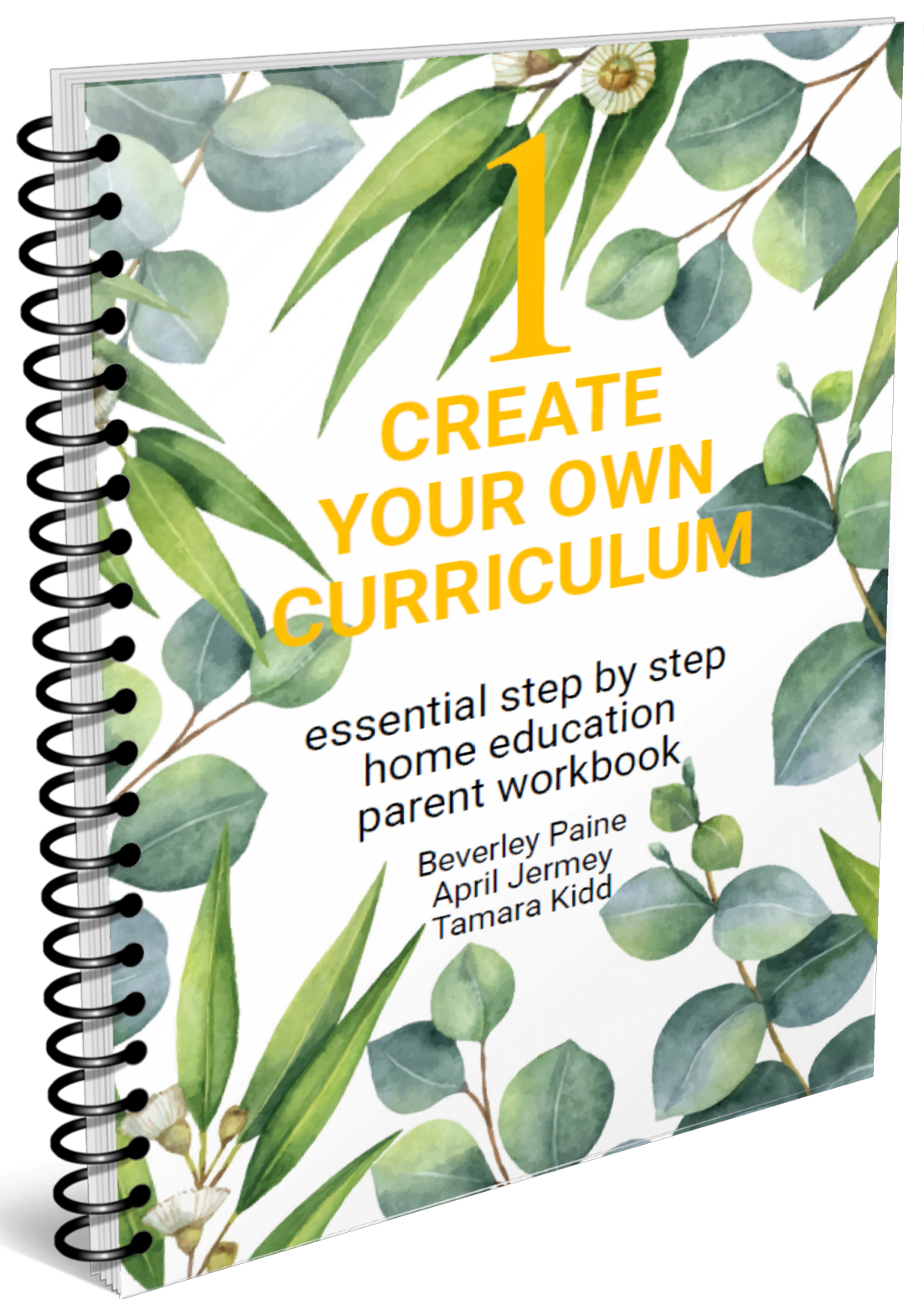
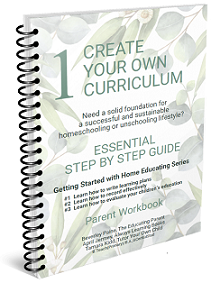
Want to learn how to write your own education plans
to suit your unique children's individual learning needs?
Or you are looking for quality curriculum and teaching tips...
Comprehensive 3 workbook 'how to home ed' course
covering the essential skills you need
successfully home educate your children
|
|
Welcome to the World of Home Education
and Learning without School!
We began educating our children in 1985, when our eldest was five. In truth, we had helped them learn what they need to learn since they were born. I am a passionate advocate of allowing children to learn unhindered by unnecessary stress and competition, meeting developmental needs in ways that suit their individual learning styles and preferences. Ours was a homeschooling, unschooling and natural learning family! There are hundreds of articles on this site to help you build confidence as a home educating family. We hope that your home educating adventure is as satisfying as ours was! Beverley Paine
3 ESSENTIAL STEP BY STEP GUIDES
Let experienced home educators Beverley, Tamara and April walk you through HOW to create a learning plan that builds on solid foundations that works for YOUR family AND ticks all the boxes for home educaton registration!
|
Tap into Beverley's
experience
through her books
"Your books, your blogs helped me beyond words... they helped me to find comfort in knowing it is ok to choose exactly what is best for my family." Nisha
"Your books and information are mind blowing and already I am feeling good about this new experience." Diane
"Your guidance, understanding, support & words of wisdom changed our lives." Leslie
"I feel specially inspired by Beverley's words and, the more I read her comments, the more inspired I feel, since my need for support, respect for different parenting styles, and information are fully met." Marijo
|
 |
|

The information on this website is of a general nature only and is not intended as personal or professional advice. This site merges and incorporates 'Homeschool Australia' and 'Unschool Australia'.
The Educating Parent acknowledges the Traditional Aboriginal and Torres Strait Islander Owners, the Custodians of Australia, and pay our respects to Elders past and present and extend that respect to Aboriginal and Torres Strait Islander people viewing this website.
Advertise on this site.




Home education is a legal alternative
to school education in Australia.
State and Territory governments are responsible
for regulating home education and have different
requirements, however home educating families
are able to develop curriculum and learning programs
to suit the individual needs of their children.

Without revenue from advertising
by educational suppliers and Google Ads
we could not continue to provide information
to home educators. Please support us by letting
our advertisers know that you found them on
The Educating Parent. Thanks!
|

 About
About

 Thank you for visiting!