|
Unschooling Interview with Beverley, February 2015
I am a society and culture student, from ..... college, completing my HSC major work, of a personal interest project (PIP). It is centred around the modes of education. Specifically, researching as to why society generally confines its view of education to institutions, rather than life experiences.
My PIP looks as 3 aspects of education, the first one being the function of institutionalised education in society. Originally the purpose of education was to educate and socialise individuals. Education's secondary social function is to teach individuals life skills, this function is currently being criticised by experts stating that, important knowledge for life is not being taught.
Could you explain how your adapted curriculum has been altered to cater to these needs?
Home education is situated at the very heart of community life, the family home, and from this foundation accesses on a daily basis community life in a natural, non-contrived manner. Resources, activities and materials don't have to be designed to replicate community experiences in framed, segmented and artificial way to teach particular skills and knowledge: children learn by living through experiences related to real need and purpose. Learning is immediately and significantly meaningful and in context with the child's life as it unfolds. This informal learning comprises a large and essential aspect of the home education experience. It's incredibly efficient which means more time is available for pursuing interests and other topics and skill acquisition in greater depth. Homeschoolers and unschoolers alike take advantage of this natural aspect of home education.
How does unshcooling differ from home schooling?
For many there is no difference: unschooling is removing the experience of school from the child's education, that is, learning without school. For others there is a subtle but important difference: the removal of school includes any vestiges of school based educational methodology and teaching strategies. It is the complete removal of 'school' from the educational experience.
Many home educators describe themselves as homeschoolers because they still see a role for classroom based methods of instruction in the home learning environment. Other home educators describe themselves as unschoolers (different from homeschoolers) because instead of instructing children using a regimented, segmented, carefully sequenced - and orchestrated for the purpose of mass education - curriculum, the what, when and how of the children's learning is determined by the child's educational and developmental needs within the context of the family, community and culture in which that child lives.
Could you explain as to how the altered curriculum suits the individual needs of children?
All home educators (homeschoolers and unschoolers) alter the curriculum to suit the individual needs of their children. Even if they start out using materials and resources designed for classroom use, with the intention of applying it rigidly as a classroom teacher would, the very act of home education naturally tailors the experience to meet individual needs. Parents, because they are specifically not teachers, have the motivation, ability and time to focus on their children's individual needs. They are also capable of tailoring resources and materials to cater directly to those needs, discarding methods and approaches that aren't meeting those needs or educational objectives in a timely manner. The constraints normally found in a classroom which inhibit this kind of responsiveness are absent. The flexibility of the home learning environment enables continuous tweaking of the educational experience to meet individual needs. Elements of the state or national curriculum are accessed and covered when the child's interest in a concept or topic is high, or when the child is showing readiness to learn those aspects of the curriculum. This can occur at any age. Usually, as a result of this, the child requires little revision as the concepts and content is generally retained, but revision is provided in the same way, as and when the need arises. Unschooling and homeschooling allows for considerably flexibility: parents and children know that what isn't covered today can be revisited tomorrow, or next year, etc. Or, if the child is having difficulty comprehending or consolidating skills or information, different strategies and resources can be easily applied and extra time provided.
There has been a recent increase in the number of individuals who are participating in unshcooling, could you please suggest why this might be?
I'm not sure if the percentage of students home educating compared to the percentage of students being educated at school has changed much in recent years - I haven't seen that statistic for over a decade. There is a perception that there is a rise in the number of students being home education but without seeing the percentage above I don't know if it is an actual increase in numbers opting for this educational choice. Thanks largely to the arrival of the internet more families are aware that they have a choice between school and home education. It's not an option families chose lightly because of the responsibility, commitment and costs required. Thirty years ago families tended to chose home education because it matched their family values and lifestyle choices. In more recent years dissatisfaction with how schools have handled problems encountered by students, in particular inability to meet specific individual learning needs and in a growing number of incidences, bullying, have been cited as reasons by parents.
Another aspect of my PIP is to understand why there is such an importance, placed by many in society, on institutionalised education. Could you please offer your personal opinion as to why this may be?
In a society where employment is mainly based in manufacturing standardised education provided en masse in institutions is an efficient approach to the training of workers. I personally think it's outdated as Australia's societal needs have changed: we are no longer a country with a large manufacturing industrial base. Mechanisation and technological advances have replaced the bulk of labour related tasks. Australia needs innovative problem solvers with entrepreneurial skills who are capable of applying themselves to meeting the nation's current and future needs, people who can confidently and assertively adapt to changing environments. Flexibility and adaptability are cornerstones of the home education experience.
Could you explain how basic literacy and numeracy are taught through unschooling?
Very young children are curious and driven by a need to emulate their parents they learn literacy and numeracy skills in much the same way they learn to walk and talk, by observing and experimenting, imitating and doing. Parents are natural encouragers and facilitators of their children's attempts to read, write and calculate. They provide activities which naturally act as scaffolds for the children's emerging and developing understandings and abilities. They arrange the environment to ensure the opportunity for successful encounters. As children grow and learn and develop their sense of responsibility they naturally become more involved in the rich and varied everyday activities and roles of family and community life. This participation naturally exposes them to an increasing range of complex literacy and numeracy skills and, supported by their parents, are guided and encouraged to embrace and learn. As with all parents, home educating parents wish their children to live happy, fulfilled lives and do what they can to facilitate this. They ensure their children encounter a range of experiences and activities and the resources and materials which will facilitate learning essential literacy and numeracy skills.
How can unschooling be altered to suit the abilities of special needs children, or those with behavioural issues?
The act of unschooling children automatically ensures the individual needs of children are identified and met. In addition, many homeschoolers, withdraw their children from school because those needs are not being met in that environment, so particular attention is focused on this aspect of the child's life. Home educators (unschoolers and homeschoolers) tend to build the child's educational experiences around those individual needs. It doesn't matter what those needs are, home education naturally lends itself to helping parents meet those needs.
School classrooms and playgrounds can be stressful environments for many children, particularly those who are highly sensitive or have special needs, learning differences, health issues, etc. Undue and unnecessary stress inhibits learning. The absence and removal of stress related to the school environment by withdrawing the child from that environment immediately offers relief. Many parents are surprised that entrenched behavioural issues are moderated or disappear during this de-schooling period. Gradually reintroducing educational activities in a way that better suits the child's learning styles and needs rekindles the child's interest and enthusiasm for learning. Parents are also able to explore more fully and redress other factors that may be contributed to a child's sense of distress (allergies, sensitivities, physical and mental health issues, etc).
Could you please comment on the success of unschooling for individuals?
There are two aspects to this question: my definition of success may not be the same as the prevailing societal perception of success. And every parent has their own definition and perception of success. I suggest that unschoolers typically aren't focused on success as an outcome of the educational process. They are focused on identifying needs and helping their children work to meet those needs. This is an enabling action that encourages and embodies the principals of service. It also encourages efficiency. Unschooling is situated in the community, not separate from it, and learning occurs within the sphere of everyday life of the community. Unschooling children are surrounded by people that expect and trust that they will learn naturally and abundantly and are respected and permitted to be active members of that community.
Do you think unschooling is something that suits the needs of all children or just those with special or alternative needs?
Unschooling, because it is built around the needs of individuals within the context of the community and society in which they live naturally suits the needs of all children (people).
Do you think unschooling can hinder a child's future career or opportunities?
Unschooling is an approach to education that focuses on the needs of the learner. It recognises, respects, and celebrates the learner's role and responsibility in his or her education. It is an enabling non-comparative and non-competitive approach to education that puts the child at the centre of the educational experience. Many things can conspire to hinder meeting a child's needs: lack of opportunity to resources due to poverty; chronic health issues; ignorance; failure to identify those needs - but these things that can affect all families regardless of their educational choices for their children.
What input is required from parents of children who participate in unschooling?
Unschooling - and homeschooling - parents don't delegate the responsibility for the education of their children to others. This means that they are hands-on parents, usually available and on task every hour of every day of every week of every year until the child becomes an adult. Helping children to get to know themselves, identify and work to meet their needs, is an essential aspect of parenthood. It requires parents to really get to know their child: understand, respect and celebrate that child's temperament and disposition and emerging personality. Home educating generally means the foregoing of a second income and sometimes the suspension of personal career pathways. It often provokes a need to derive additional income to support the family through innovative and entrepreneurial ways such as home based businesses. Such businesses also provide platforms for children to learn about the world of meaningful and purposeful employment and to build valuable skill sets and work ethics. As parents learn alongside their children high levels of education are not needed in the early years but it does help to have an enthusiastic 'have a go' attitude to learning, a sense of humour and a natural love of and respect for children. A readiness to learn, experiment, embrace failures as learning opportunities, network with others, explore the community and environment to find and exploit educational resources also helps.

Was this article helpful? Was it worth $1.00 to you?
Your gift of $1 or more helps to keep this site operating
offering encouragement
and reassurance to families
wanting
better outcomes for their children.

Beverley Paine with her children, and their home educated children, relaxing at home.
Together with the support of my family, my aim is to help parents educate their children in stress-free, nurturing environments. In addition to building and maintaing this website, I continue to create and manage local and national home educating networks, help to organise conferences and camps, as well as write for, edit and produce newsletters, resource directories and magazines. I am an active supporter of national, state, regional and local home education groups.
"You've been an inspiration to me, I love the way
you really listen to people." Vanessa
"Whenever I read your writing I always come away
with increased confidence in my ability to provide and
share a wonderful learning journey with my family!" Davina
"Your guidance, understanding, support and words of
wisdom changed our lives. We now offer support and
organise many homeschooling events for others." Lesley
"Thank you once again for your prompt and friendly service.
I am convinced that your books are going to add
quality and peace of mind to my journey of teaching my kids
at home! Just from studying your website, until almost
2am
in the morning, I 've been encouraged!" Louisa
"Thank you for all your many,many reassuring words
over many, many years. You probably don't know exactly how
valuable you are to the Australian Home Education community.
I've been reading your stuff for maybe 8 years or more now.
And I'm very grateful." Gythaa


Want to learn how to write your own education plans
to suit your unique children's individual learning needs?
Or you are looking for quality curriculum and teaching tips...
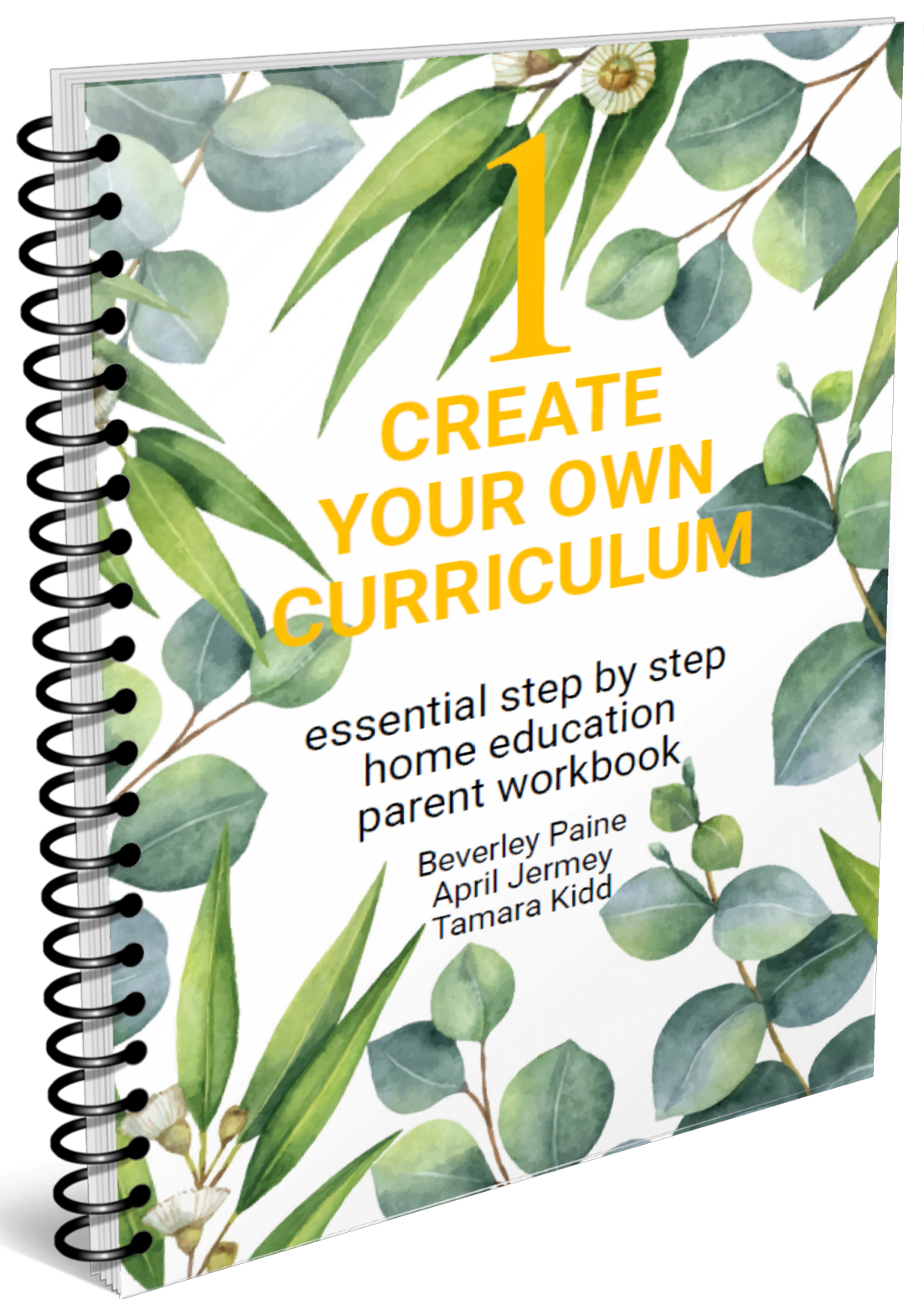
Comprehensive 3 workbook 'how to home ed' course
covering the essential skills you need
successfully home educate your children
|
|
Welcome to the World of Home Education
and Learning without School!
We began educating our children in 1985, when our eldest was five. In truth, we had helped them learn what they need to learn since they were born. I am a passionate advocate of allowing children to learn unhindered by unnecessary stress and competition, meeting developmental needs in ways that suit their individual learning styles and preferences. Ours was a homeschooling, unschooling and natural learning family! There are hundreds of articles on this site to help you build confidence as a home educating family. We hope that your home educating adventure is as satisfying as ours was! Beverley Paine
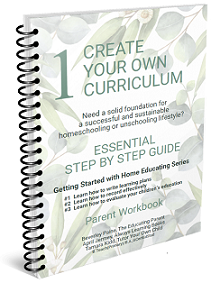
3 ESSENTIAL STEP BY STEP GUIDES
Let experienced home educators Beverley, Tamara and April walk you through HOW to create a learning plan that builds on solid foundations that works for YOUR family AND ticks all the boxes for home educaton registration!
|
Tap into Beverley's
experience
through her books
"Your books, your blogs helped me beyond words... they helped me to find comfort in knowing it is ok to choose exactly what is best for my family." Nisha
"Your books and information are mind blowing and already I am feeling good about this new experience." Diane
"Your guidance, understanding, support & words of wisdom changed our lives." Leslie
"I feel specially inspired by Beverley's words and, the more I read her comments, the more inspired I feel, since my need for support, respect for different parenting styles, and information are fully met." Marijo
|
 |
|

The information on this website is of a general nature only and is not intended as personal or professional advice. This site merges and incorporates 'Homeschool Australia' and 'Unschool Australia'.
The Educating Parent acknowledges the Traditional Aboriginal and Torres Strait Islander Owners, the Custodians of Australia, and pay our respects to Elders past and present and extend that respect to Aboriginal and Torres Strait Islander people viewing this website.
Advertise on this site.




Home education is a legal alternative
to school education in Australia.
State and Territory governments are responsible
for regulating home education and have different
requirements, however home educating families
are able to develop curriculum and learning programs
to suit the individual needs of their children.

Without revenue from advertising
by educational suppliers and Google Ads
we could not continue to provide information
to home educators. Please support us by letting
our advertisers know that you found them on
The Educating Parent. Thanks!
|

 About
About

 Thank you for visiting!