|
Debunking Myths about Homeschooling
by Beverley Paine
One of the best and easiest books I've read about home education wasn't actually about home education: Challenging Assumptions in Education by Wendy Priesnitz (Life Media, http://www.lifemedia.ca/altpress/cae.htm ) debunks the myths about schooling, and in doing so builds a compelling argument for home education.
Schools, by and large, offer a passive education: it is something that is done to you and neither parent or child has much say or input into what, how, when and why is taught. It was created for a different era in human history, an age where passive education was the best way to prepare people for a life time of employment as process workers in factories or home duties. Today's fast paced societies need creative and innovative problem solvers who build and utilise knowledge, skills and understanding as they are needed. The flexible and adaptable environment of the home, together with free access to the community and environment, allows this to happen naturally for students of all ages.
Rigid time-tables, scopes and sequences and inflexible subjects within prescribed curricula can't keep pace with the changing nature of learning and education. The internet is steadily redefining 'expert': the ability to research, sift through and make sense of information provided by lay people as well as experts is becoming sought after by employers, much more than 'certificates of education'.
For decades educators have understood the importance of learning styles, yet schools are incapable of teaching children as individuals, thus preventing the realisation of the much often stated goal of 'fulfilling the child's potential'. The 'back to basics' knee-jerk reaction to badly implemented education innovation of the last half of last century moves schools further away from applying 'best classroom practice' educational research continues to present.
Schools fail to train society's youth for life as adults: in most Australian states youth unemployment continues to hover around 15% to 25%. They fail to fulfil their noble purpose for many youngsters. We're told that children need to go to school because that is where they will learn to be part of and build caring, tolerant and just societies, where people are treated equally and diversity valued. As Priesnitz puts it, "The reality does not reflect the ideology." And never has, even though generations in Australia has had access to 'quality education' in schools.
Questioning the efficacy of schooling is a good place to start when exploring the notion of home education. Understanding why schools fail so many students and families helps to explain why teaching our children at home is, by comparison, so effective.
The first myth would-be home educators have to dispel is that home education is 'school-at-home'. Our children know the difference between school and home and rarely let us play that game for long. They challenge us to stop playing 'teacher' and simply get on with the job of educating them the way we naturally did when they were young, before they went to school, the way people have educated their children for millennia.
The second myth about home education is that costs a fortune. It can cost whatever you want it to cost. Children need time and patience and someone to be there, looking after them, answering their questions and talking to them, showing them how to live in the world, more than they need toys, educational aids and materials, computers, televisions and gadgets. Instead of presenting an expensive smorgasbord of options in the hope that it will prepare them for a decade hence, children need parents to be attentive, busy, productive and model the kind of adult they want their children to become. Homeschooling parents rarely worry about the cost of materials a child needs to pursue an interest in depth: providing a violin or a telescope for an enthusiastic and passionate child is built into the budget as a matter of course.
The third and most persistent myth is that homeschooled children have no social skills and can't mix with others. Few people question the sanity of the social skills of schooled children as society grapples with problem youth from one generation to the next. These shopaholics, drug and alcohol addicted or unemployable youth spent at least ten years in the school system, along with the bullies and they shy kids they picked on. Few adults want to spend time with schooled teenagers, listening to inane conversation about the latest fad or craze. Most homeschooled teens feel the same way. Their apparent lack of social skills is often actually a sign of maturity beyond their years (more akin to the social skills of youngsters of that age a couple of centuries ago, or in a developing country where youngsters are required to participate in community life from an early age).
Home educators value the development of social skills, rather than the unguided socialisation processes that occur in under-supervised classrooms and playgrounds. Homeschooled youngsters socialise in more natural and caring environments which allows for timely and effective conflict resolution. They interact with a range of children and people from diverse backgrounds and ages on a regular basis, often with an emphasis on community building, volunteering and serving others.
The final myth is that children need to go to school, pass the final year exam to get into university or be successful in life. Children need to be loved, cared for, have an active interest taken in their welfare and education and shown how to use the tools everyone needs in adult life to achieve their goals. A TER score may get your child into university but it doesn't guarantee she will be successful, either in her course or her chosen career. Home educated students, like mature age entry students, do much better at university because they've had time and freedom to work out what it is they really want to do with their life. They are there, not because it is expected of them, but because they need to be there - it is the next step for them in a planned future. In many cases they have already spent considerable time in their teenage years either doing work experience or investigating and exploring their chosen careers.
For decades home educated graduates have been finding their way into tertiary education and employment without TER scores, final year exams, or any kind of schooling at all. And tertiary institutions are beginning to seek home educated students because they are highly motivated and successful students.
The arguments against home education are many but mostly founded on fear of the unknown: take some time to get to know some home educating families and you'll be surprised at how normal they are, how effective the educational programs the children are following are, and at the enduring close and cooperative relationships developing within those families. Home education isn't for all families, but it works exceptionally well for a growing number of families who decide to give it a go.

Was this article helpful? Was it worth $1.00 to you?
Your gift of $1 or more helps to keep this site operating
offering encouragement
and reassurance to families
wanting
better outcomes for their children.

Beverley Paine with her children, and their home educated children, relaxing at home.
Together with the support of my family, my aim is to help parents educate their children in stress-free, nurturing environments. In addition to building and maintaing this website, I continue to create and manage local and national home educating networks, help to organise conferences and camps, as well as write for, edit and produce newsletters, resource directories and magazines. I am an active supporter of national, state, regional and local home education groups.
"You've been an inspiration to me, I love the way
you really listen to people." Vanessa
"Whenever I read your writing I always come away
with increased confidence in my ability to provide and
share a wonderful learning journey with my family!" Davina
"Your guidance, understanding, support and words of
wisdom changed our lives. We now offer support and
organise many homeschooling events for others." Lesley
"Thank you once again for your prompt and friendly service.
I am convinced that your books are going to add
quality and peace of mind to my journey of teaching my kids
at home! Just from studying your website, until almost
2am
in the morning, I 've been encouraged!" Louisa
"Thank you for all your many,many reassuring words
over many, many years. You probably don't know exactly how
valuable you are to the Australian Home Education community.
I've been reading your stuff for maybe 8 years or more now.
And I'm very grateful." Gythaa


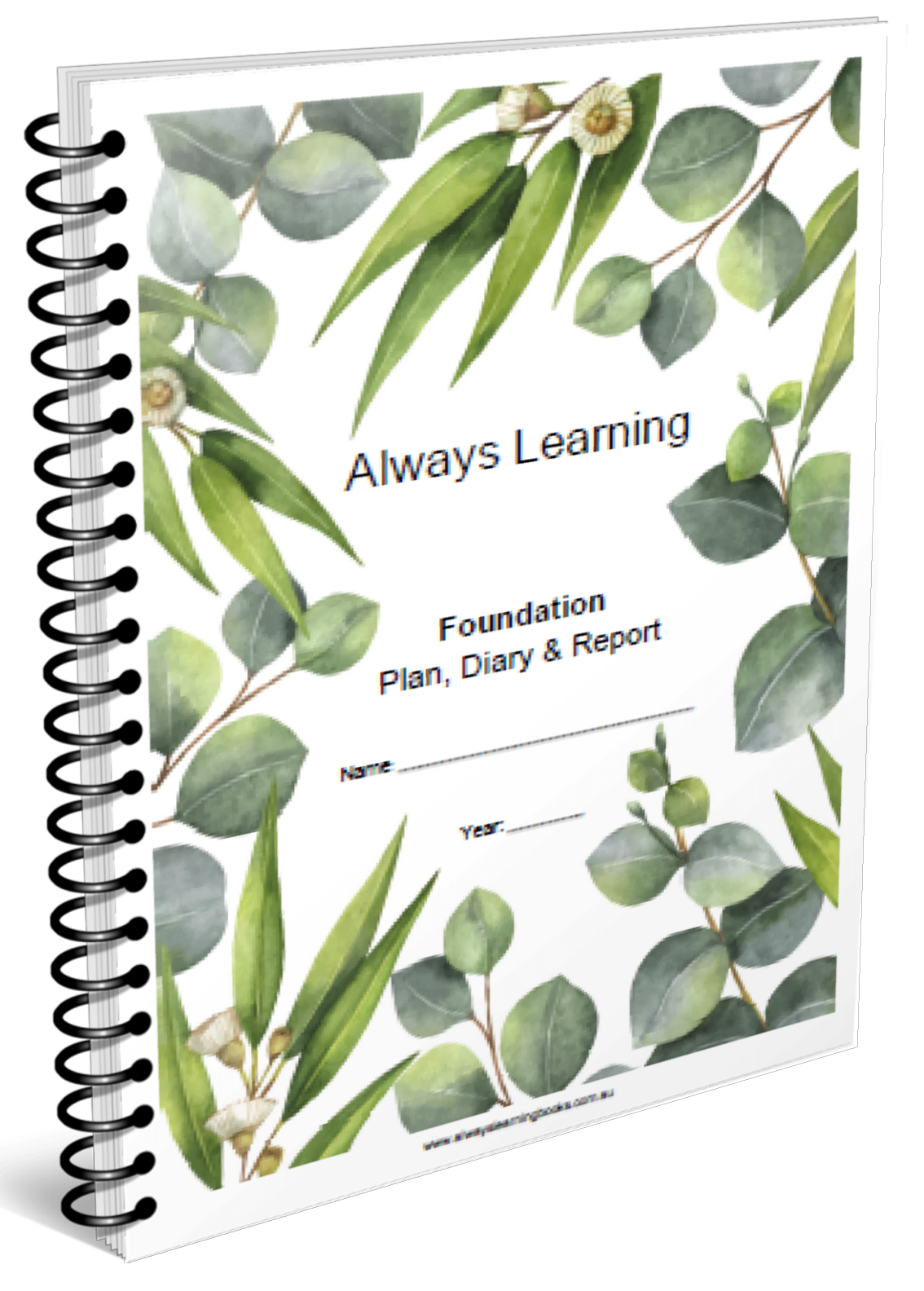
Want to learn how to write your own education plans
to suit your unique children's individual learning needs?
Or you are looking for quality curriculum and teaching tips...
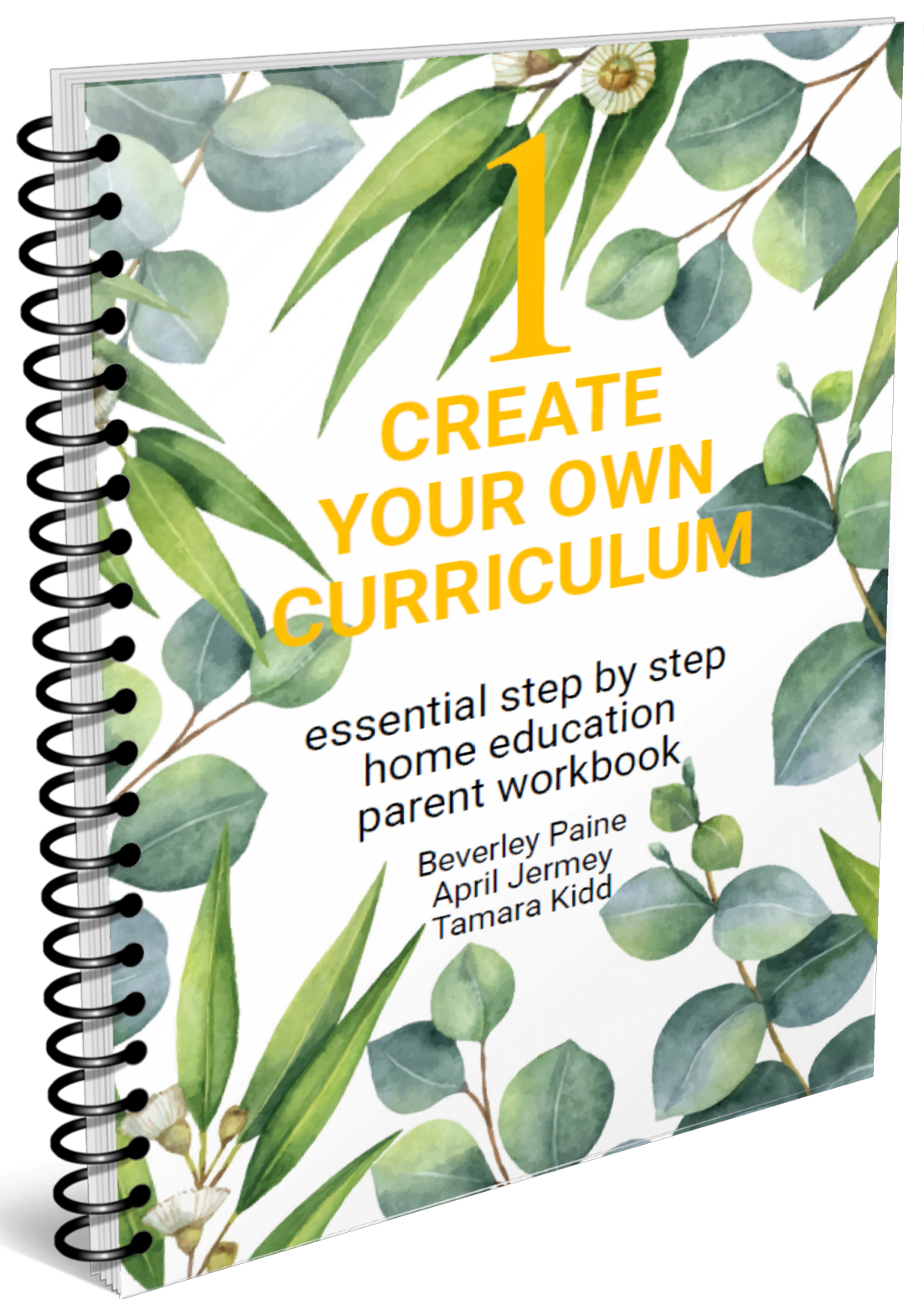
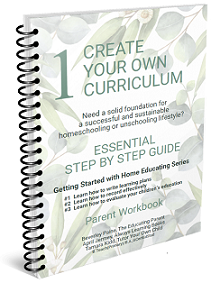
Comprehensive 3 workbook 'how to home ed' course
covering the essential skills you need
successfully home educate your children
|
|
Welcome to the World of Home Education
and Learning without School!
We began educating our children in 1985, when our eldest was five. In truth, we had helped them learn what they need to learn since they were born. I am a passionate advocate of allowing children to learn unhindered by unnecessary stress and competition, meeting developmental needs in ways that suit their individual learning styles and preferences. Ours was a homeschooling, unschooling and natural learning family! There are hundreds of articles on this site to help you build confidence as a home educating family. We hope that your home educating adventure is as satisfying as ours was! Beverley Paine
3 ESSENTIAL STEP BY STEP GUIDES
Let experienced home educators Beverley, Tamara and April walk you through HOW to create a learning plan that builds on solid foundations that works for YOUR family AND ticks all the boxes for home educaton registration!
|
Tap into Beverley's
experience
through her books
"Your books, your blogs helped me beyond words... they helped me to find comfort in knowing it is ok to choose exactly what is best for my family." Nisha
"Your books and information are mind blowing and already I am feeling good about this new experience." Diane
"Your guidance, understanding, support & words of wisdom changed our lives." Leslie
"I feel specially inspired by Beverley's words and, the more I read her comments, the more inspired I feel, since my need for support, respect for different parenting styles, and information are fully met." Marijo
|
 |
|

The information on this website is of a general nature only and is not intended as personal or professional advice. This site merges and incorporates 'Homeschool Australia' and 'Unschool Australia'.
The Educating Parent acknowledges the Traditional Aboriginal and Torres Strait Islander Owners, the Custodians of Australia, and pay our respects to Elders past and present and extend that respect to Aboriginal and Torres Strait Islander people viewing this website.
Advertise on this site.


Home education is a legal alternative
to school education in Australia.
State and Territory governments are responsible
for regulating home education and have different
requirements, however home educating families
are able to develop curriculum and learning programs
to suit the individual needs of their children.

Without revenue from advertising
by educational suppliers and Google Ads
we could not continue to provide information
to home educators. Please support us by letting
our advertisers know that you found them on
The Educating Parent. Thanks!
|

 About
About

 Thank you for visiting!